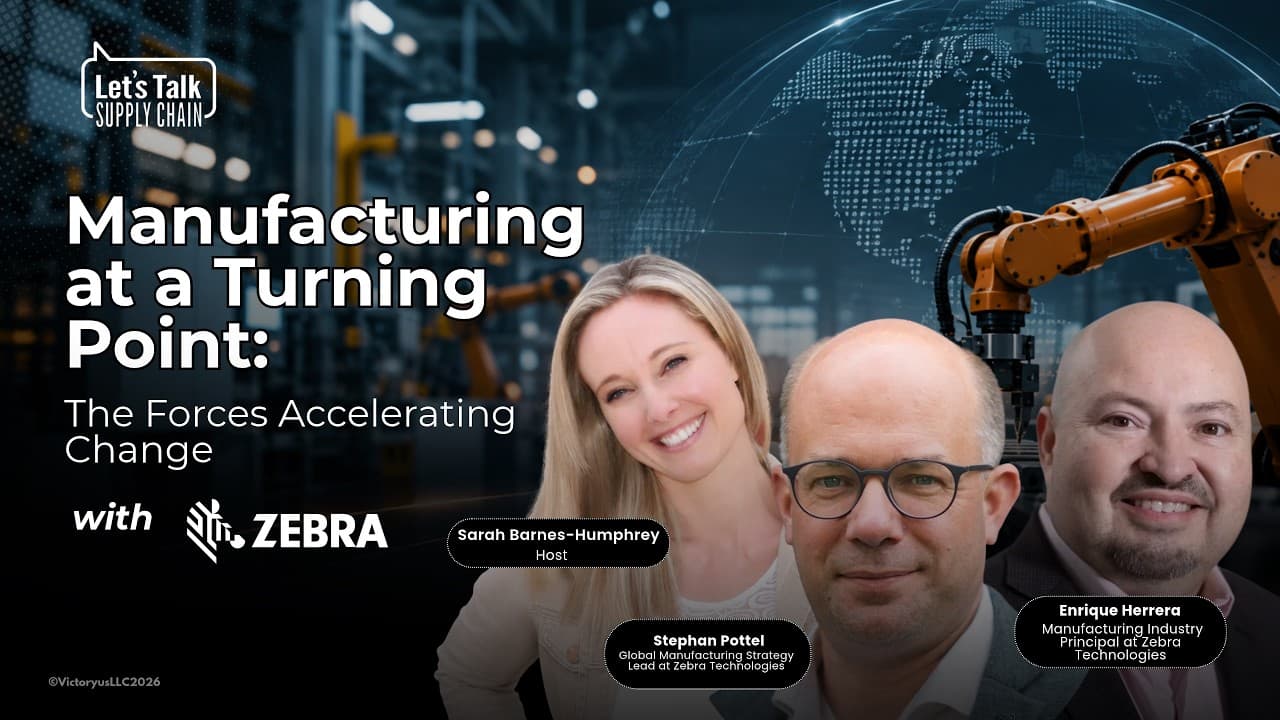
575: Manufacturing at a Turning Point: The Forces Accelerating Change, with Zebra Technologies
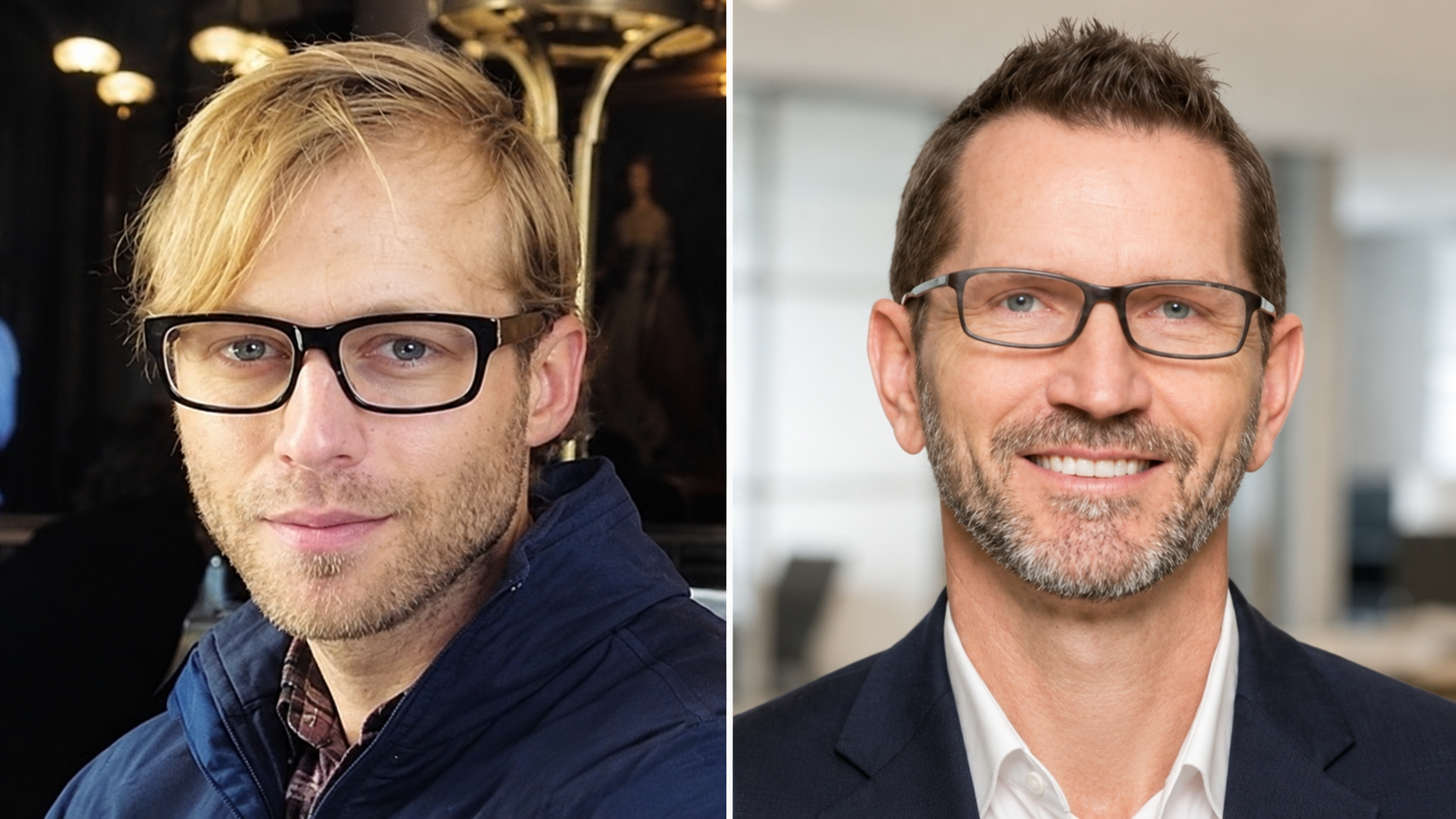
Enrique Herrera, Manufacturing Industry Principal, and Stephan Pottel, Global Manufacturing Strategy Lead at Zebra Technologies, share their expertise on the changes in manufacturing. They identify key pressures like supply chain complexity and a shifting workforce as primary drivers for digital transformation. Herrera and Pottel argue that technology, from real-time asset tracking to on-device AI, is crucial for empowering frontline workers and bridging the skills gap between retiring experts and new talent. They stress that the goal is to augment human capabilities, turning siloed operational data into actionable, real-time insights for more resilient operations.
Today I’m joined by a company that is striving to make work better every day: Zebra Technologies.
Zebra provides the foundation for intelligent operations with an award-winning portfolio of connected frontline, asset visibility and automation solutions. Organizations globally across retail, manufacturing, transportation, logistics, healthcare, and other industries rely on Zebra to deliver outcomes today while driving innovation for what’s next.
Today Enrique Herrera, Manufacturing Industry Principal, and Stephan Pottel, Global Manufacturing Strategy Lead, join me to explore what’s pushing plant managers to accelerate change in an increasingly demanding manufacturing landscape. We’ll discuss the frontline labour dilemma, the growing need for real-time operational visibility, the role of connected technologies in keeping production moving, the reality of AI in manufacturing, and why the future of automation is less about replacing workers and more about giving them superpowers.
Guest bios:
Enrique Herrera, Manufacturing Industry Principal. Enrique is the Manufacturing Industry Principal at Zebra Technologies, a distinguished expert with over 34 years of experience driving digital transformation within the manufacturing sector. His career is marked by a deep specialization in automotive manufacturing, Industry 4.0, and large-scale IT transformation. He spent 15 years in the automotive industry, gaining invaluable experience at premier OEMs like Ford and Jaguar Cars, as well as the major Tier 1 supplier, Visteon Corporation. Following his extensive work in automotive, Enrique spent 19 years at the forefront of the Industry 4.0 revolution, leading key initiatives at software pioneers OSIsoft (now Aveva, part of Schneider Electric) and Microsoft. In his current role at Zebra Technologies, he leverages his extensive expertise to help manufacturers and partners unlock the full potential of their data, enhance operational efficiency, and strategically prepare for the next wave of industrial technology.
Stephan Pottel, Global Manufacturing Strategy Lead. Stephan has been with Zebra Technologies since 2017 and has recently taken on the role of Global Manufacturing Sales Strategy Lead within the Chief Technology Office. Previously, he was part of the EMEA Strategy and Business Development team. In his role as Global Sales Strategy Lead, Stephan focuses on trends and key market drivers in the manufacturing industry. He also represents Zebra at industry-specific events and podcasts, discussing the latest industry developments and technology trends. Before joining Zebra, Stephan held various positions at a pan-European systems integrator and a start-up company focused on SAP Mobility. Stephan has over 20 years of industry experience in bringing new technologies to early-adopter customers across the transport, logistics and manufacturing sectors. He holds a bachelor’s degree in Applied Computer Science from the University of Applied Sciences Niederrhein in Germany.
How the supply chain landscape is changing, the growing pressures facing manufacturers, and why these challenges are accelerating the need for digital transformation.
How technology can help manufacturers address the growing skills gap, retain and transfer critical knowledge from experienced workers, and make manufacturing roles more attractive to the next generation.
Why many manufacturers struggle to turn digital transformation ambitions into reality, the barriers to achieving real-time operational visibility, and how to translate data into meaningful, informed business decisions.
How technologies such as RFID, real-time location systems and industrial scanning are improving end-to-end manufacturing visibility, enabling better tracking of assets and materials, and unlocking greater operational efficiency and control.
How real-time asset tracking and connected workflows can improve lineside replenishment, prevent production delays caused by material shortages, and ensure the right components reach the right workstation at the right time.
How technology and AI can empower manufacturing operators, enhance their skills and productivity, and support people in their roles rather than simply replacing them.
Why centralized cloud systems don’t always work in manufacturing, and how edge computing and on-device AI bring intelligence closer to the frontline, enabling faster, more reliable decision-making and new opportunities for connected operations.
How ready manufacturers really are to adopt AI, the importance of getting the digital foundations right first, and how to measure the business impact of technology investments through meaningful operational metrics and a compelling case for change.
One practical change plant managers can make immediately to improve factory productivity and deliver a tangible operational impact.
The one key piece of advice for manufacturing leaders looking to future-proof their operations, build resilience and prepare for the challenges and opportunities of the next five years. “Continue to invest in automation, but make sure to keep humans in the loop.”
Resources & Links Mentioned
- Head over to Zebra’s website now to find out more and discover how they could help you too. You can also connect with Zebra Technologies and keep up to date with the latest over on LinkedIn, Facebook or YouTube, or you can connect with Enrique or Stephan on LinkedIn.
- If you enjoyed this episode and want to hear more insightful content from Zebra, check out 571: Discover the Future of Intelligent Supply Chains, with Zebra Technologies.
- Check out our other podcasts HERE.