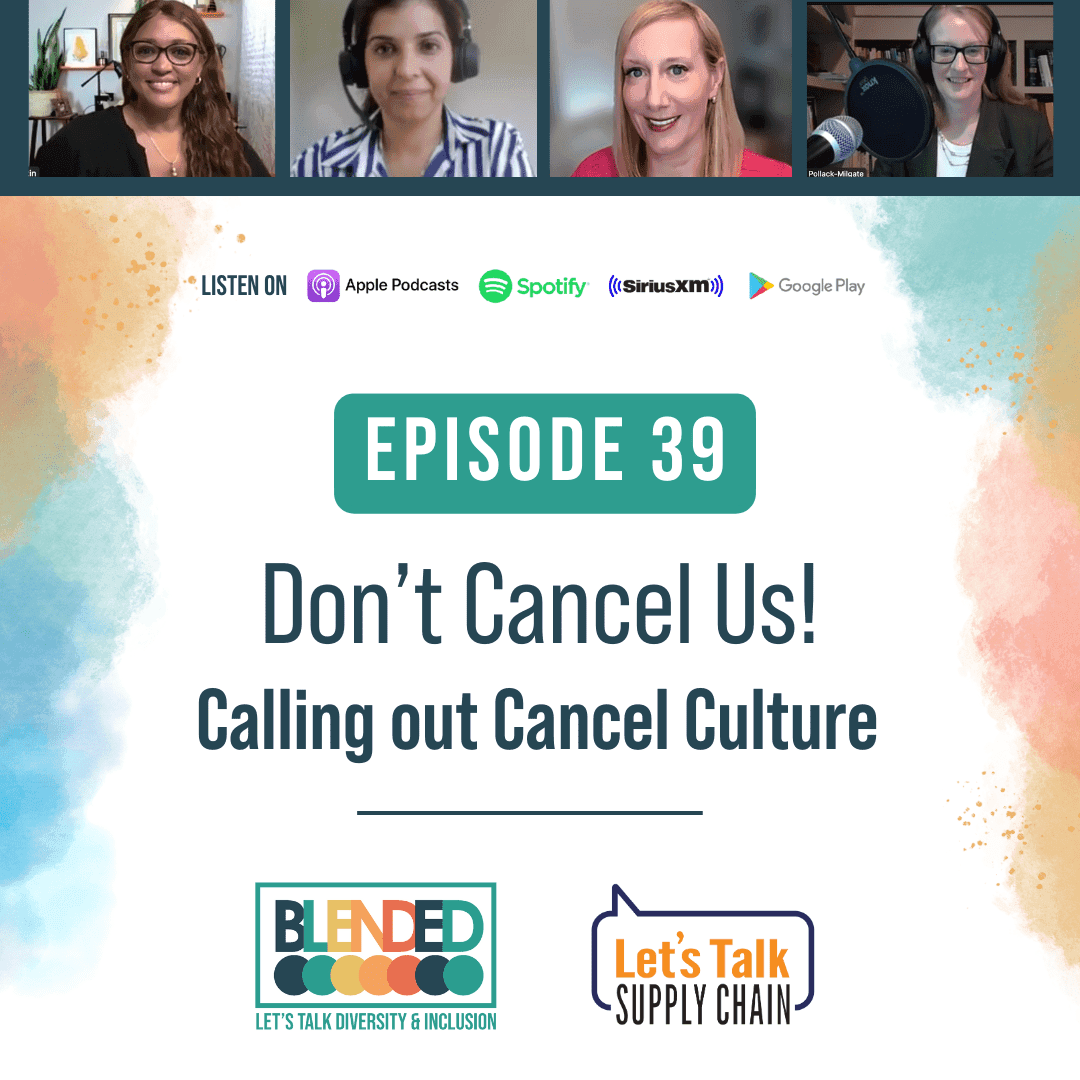
381 – Blended: Don’t Cancel Us! Calling out Cancel Culture
Welcome back to Blended! It’s episode 39, I am once again joined by a brand new group of professionals who are bringing honesty and authenticity to the table and, today, we’re taking on our most controversial topic yet – cancel culture!
It’s a term that has rapidly grown over the last few years, in light of movements like Me Too and Black Lives Matter, where people in positions of power have been found to have abused those positions, without being held to account. But, despite some of the positive outcomes from those movements, cancel culture remains controversial.
And so as we think about the rise of diversity, equity and inclusion initiatives across the workplace, it’s important to pick apart the headlines from the realities, overlay that with wider social discussions, and get a feel for how the impact of things like cancel culture might be felt in the workplace.
Today, our guests will be talking about what cancel culture actually means; how and why it’s changed; the role of social media and politics in the weaponization of cancel culture; and what organizations can do to tackle cancel culture and create thriving workplaces.
Introductions to our Blended panellists. Melody – Executive Communication Coach Deborah – Partner at Barnes & Thornburg LLP and co-host of Parity podcast Parul – Supply chain leader at Yamaha Motor Canada Holly – Director of Logistics at C&D Trojan
The group discuss what cancel culture means; how it’s changed; and why it’s grown so rapidly as a movement. Spiral of silence Echo chamber effect Avoidance of hard conversations Hiding behind social media presence Rise of social media Transparency Power Demonstrating what matters to you Impact on mental health Misunderstandings No second chances Herd mentality/bandwagon Impact of personal politics Black and white/grey areas Fear Celebrity Politics “It was a way, with the Me Too and Black Lives Matter movements, to bring attention to historically unheard or discounted voices.” Holly “It gives power when you feel powerless… It brings intentionality as to where and how you spend your time and money.” Melody
The panel reflect on whether cancel culture has become a buzzword, and whether or not it’s overused or misunderstood. Right and wrong Boycott Consequences Separating ideology and opinion from the individual Snap decisions Who’s fueling the fire? Corruption of the term itself Relationship to patriarchy and white supremacy Google reviews and impact on businesses Behavior in places like Facebook groups “A lot of this is as a result of our politics. We’ve come to this place where we paint people as good or bad… it robs us of nuance.” Deborah
The group discuss how this all relates to the workplace, and whether cancel culture has impacted them professionally. Speaking up Role of HR Advocating for yourself Acknowledge different perspectives Openness and honesty Respect Intent DEI communities Debate within communities Giving grace Importance of working on yourself Listening Unconscious and conscious bias Who’s in charge of deciding what’s right and wrong? Working on interpersonal communication Walking a fine line Saying no to opportunities Saying sorry Second chances “It’s the same principle as a debate. The more you understand about opposing perspectives, the more persuasive and convincing you can be.” Melody
The panel reflect on the trend of ‘automatic apologies,’ and whether or not we are we desensitized to apologies. “I’m sorry you feel that way…” Sincerity Intentionality How we appear Realising we can’t control how others view or accept an apology Quick to judge What people feel vs what they should be feeling Credibility Conflict as entertainment
The group discuss what organizations can do to combat toxic workplaces and create positive cultures. Top down culture One to ones Open suggestion box Anonymous staff surveys HR Individual autonomy Creating safe spaces Accountability Bridging the gap Focus on the outcome Diversity and inclusion “Acknowledge: ‘I don’t have answers. I am working towards a workplace I want to be a part of. I don’t know how we fix things. I’m going to offer you some ideas, and I’d like you to share your ideas as well.’” Deborah
The group sum-up their thoughts from today’s discussion.
Resources & Links Mentioned
- You can connect with Melody, Deborah, Parul and Holly over on LinkedIn.
- If you’d like to hear more from Holly, listen to 353: Women In Supply Chain™, Holly Pearce. And for other inspirational conversations around diversity, equity and inclusion, check out 323: Blended – How to Foster an Inclusive Workplace or 179: Blended – The history, the movement, the people.
- Check out our other podcasts HERE.