
536: Prevent Supply Disruptions and Protect Revenue, with FourKites
Stephen Dyke is the Principal Solutions Consultant Manager at FourKites, with over 25 years of experience in the global supply chain industry. He combines a background in computer science with deep operational expertise, describing himself as a passionate practitioner focused on solving complex execution challenges. Dyke advocates for moving beyond simple visibility to AI-driven supply chain orchestration to break down data silos and enable proactive decision-making. He stresses the importance of harmonizing data across the entire ecosystem to prevent disruptions and protect revenue.
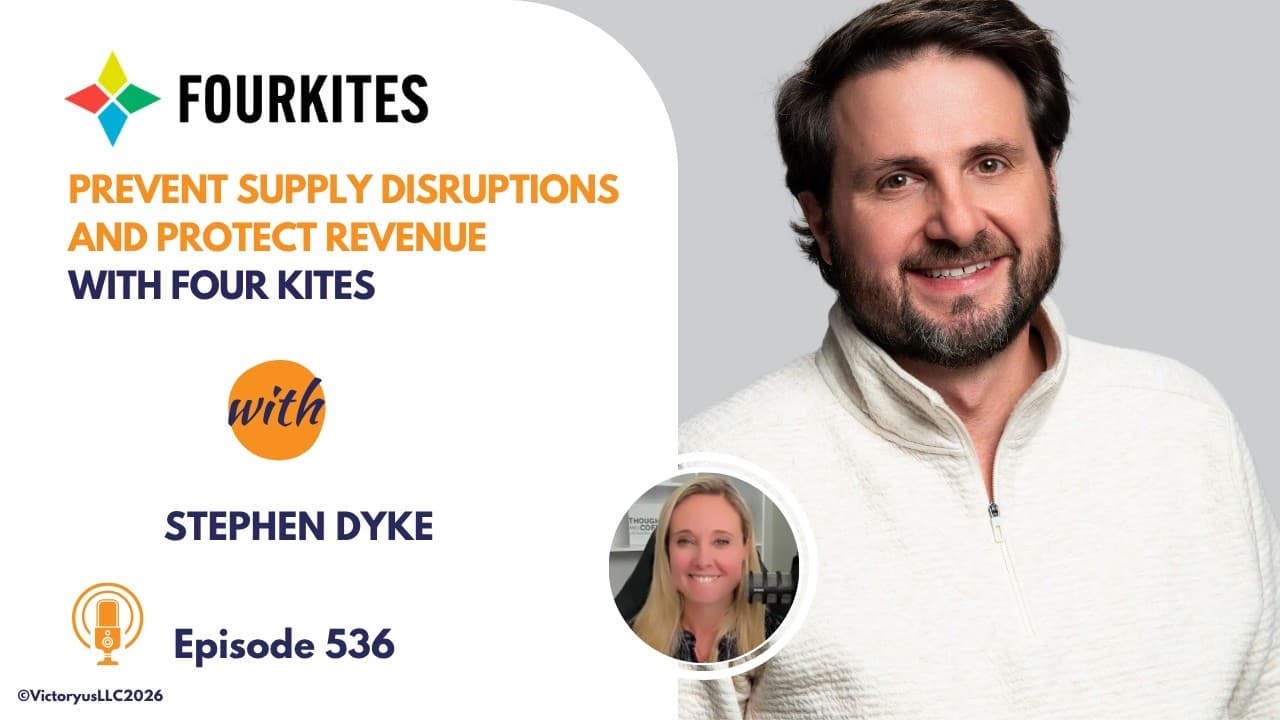
Today I’m joined by FourKites, a company that’s helping brands turn real-time visibility data into automated execution.
FourKites is the global leader in AI-driven supply chain transformation technologies, helping the world’s biggest brands and businesses turn data into action like never before.
Today Stephen Dyke, Principal Solutions Consultant Manager at FourKites, joins me to talk all about how fragmented inbound logistics quietly destroys value, and the burden of manual work. We’ll be exploring why the receiving dock is one of the most under-invested areas in supply chain, and getting logistics intelligence into the hands of the teams that need it. And we’ll be shining a light on what could happen to your business if AI gave you advance warning of supplier delays a massive three WEEKS out.
Guest bio:
In 2007, Stephen transitioned into a pre-sales role when he joined Sterling Commerce, which was later acquired by IBM in 2010. During his tenure at IBM, he played a pivotal role in spearheading the Watson Supply Chain Visibility practice as a Technical Sales Executive. Stephen joined FourKites in 2018 and has been instrumental in aligning the needs of both prospects and customers with FourKites solutions, while teaming with Product Management on bringing new solutions to market.
An introduction to Stephen, his background combining computing and supply chain and, as a self-confessed ‘passionate practitioner,’ what he loves about supply chain.
An overview of FourKites – who they are, what they do, and how they help their customers.
Why 2026 MIT research found that fragmented inbound logistics is still wreaking havoc across organizations, what that fragmentation typically looks like, the big impacts coming from it, and what that all means for businesses.
Why the transfer of data is central to the issue of fragmentation and siloes, the core business disciplines that need access to historically logistics-owned data, and how they’re actually getting it.
The type of manual work inbound teams are still doing daily, the problem with human validation, and why a shift from reactive to proactive action is critical.
From manual status updates and delay notifications to document processing, what supplier communication typically looks like and why it’s so hard.
The first thing you should do if your inbound process still runs on spreadsheets and phone calls, and why transformation and innovation is more than just an operational benefit.
Why the receiving dock and yard don’t get as much attention as areas like outbound delivery, and the business cost of not looking at them equally.
The power of AI within your ecosystem, and how it can change the way teams make decisions.
The key tenants of gold standard inbound logistics, and the potential benefits from achieving it.
The one thing listeners should take away from this conversation.
Resources & Links Mentioned
- Head over to FourKite’s website now to find out more and discover how they could help you too. You can also connect with FourKites and keep up to date with the latest over on LinkedIn, Facebook or YouTube, or you can connect with Stephen on LinkedIn.
- If you enjoyed this episode and want to hear more from FourKites, check out 235: Use Real-Time Visibility To Transform Your Entire Supply Chain, with FourKites.
- Check out our other podcasts HERE.
AI & Automation
How artificial intelligence and automation are actually showing up in supply chain operations — beyond the hype.

4: Eliminating the Latency Tax: Get Smarter, Connected Retail and Supply Chain Planning in APAC, with Anaplan
Oct 19, 2026

569: Four Eras of Freight Audit, Still Six Weeks Too Late, with Shipium
Oct 12, 2026

568: Operationalizing AI in Planning: Go From Experimentation to ROI, with Anaplan
Oct 8, 2026

567: People, Purpose, and Performance: Go Beyond Transportation, with Keller Logistics Group
Oct 5, 2026

565: Beyond Visibility: Turning Logistics Data Into Landed Cost Savings, with Gnosis Freight
Sep 21, 2026

564: Discover Why Peak Season Is A Margin-Making Event, Not An Ops Event, with Shipium
Sep 14, 2026