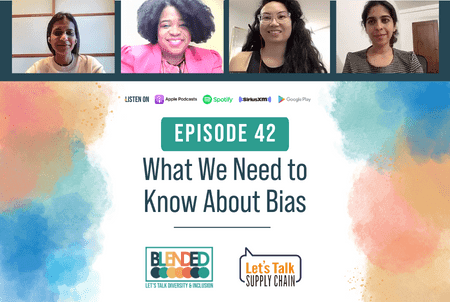
397 – Blended: What We Need To Know About Bias
Welcome back to Blended!
Last month, my guests and I talked about preference versus bias. We had some really interesting discussions on the difference between the two, how you can support preference without enabling bias and why, as part of our individual growth, we should be looking within ourselves and evaluating the preferences we hold, and why we hold them.
It was a great discussion – but we can only cover so much in one episode! And I still had a lot of thoughts. So, today, we’re continuing that discussion and diving deeper into what we need to know about bias.
Where does it come from and how do we learn about it? How do we handle it, and where do workplaces fit in? And, most importantly, how do we call it out – not just in others, but in ourselves?
Our guests will be tackling those big questions, and more, today.
Introductions to our Blended panelists. Shimon – Technical Program Manager at Apple Margot – VP, Head of North America Diversity and Inclusion at SAP Pooja – Chief Product and Technical Officer at Honor Education Mary – Founder at Resilient Musicians Academy
The group discussed bias – where it comes from; the role of labels and titles in excusing and promoting bias; and the top five biases Margot addresses in her role as head of diversity and inclusion. Impact of background and upbringing Impact of lived experiences Positive and negative bias How we interpret huge amounts of data Bias is natural Learned attitudes and stereotypes Socialization Perspective Calling out vs calling in Open-mindedness Opening up conversations Therapy and mental health days Empathy Is DEI biased? Leading by example Addressing your own bias first The bias of having a “go-to person” in the workplace Association bias Affinity bias Attention bias Halo effect Workplace proximity bias Excuses for bias “Bias are thoughts that are embedded within us because of our cultural upbringing, our surroundings – sometimes it just gets stuck as an opinion. It takes a lot of learning, and unlearning.” Shimon
The panel shared their personal experiences of bias and reflected on what they’ve learned. Balancing affinity bias with a sense of home/comfort to be found in similar communities Conscious bias becoming unconscious bias Mary’s experience of bias within her family Comparison to others Shimon’s experience of being an Indian immigrant in the U.S. Who’s responsibility is it to tackle bias? Curiosity Society pushing us to certain timelines Ongoing learning Intent Self-awareness Pooja’s experience of missing out on opportunities because of motherhood Other people’s bias impacting your own self-belief/self-esteem Margot’s experience of education bias and impact on hiring Margot’s experience of hair bias Legacy preferences “You have to acknowledge that they only know what they know. Sometimes it becomes your responsibility to be open-minded… sometimes questions come from a place of curiosity, and I have to not be defensive.” Shimon
The group discussed the different ways we can confront bias, personally and professionally. Proactive approach Acknowledge existence Acknowledge impacts “Going first” approach Asking others Reactive approach Journalling ‘Circle of awareness’ and mindfulness Empathy Compassion Re-framing conversations – focus on behavior instead of attacking Safe spaces Independent learning Being vulnerable Coaching culture vs cancel culture Getting comfortable with being uncomfortable Enablement vs training Inclusive language Measure results Show outcomes Allyship
The group sum up their thoughts from today’s discussion. “We’re not perfect. Come from a place of intent, speak your truth, be courageous, and make a difference – be the change you want to see.” Margot
Resources & Links Mentioned
- You can connect with Margo, Mary, Pooja, and Shimon over on LinkedIn.
- If you enjoyed this episode and want to hear more, listen to 375 – Blended: ‘Did They Just Say That?’ The Truth About Microaggression or 323: Blended – How to Foster an Inclusive Workplace.
- Check out our other podcasts HERE.