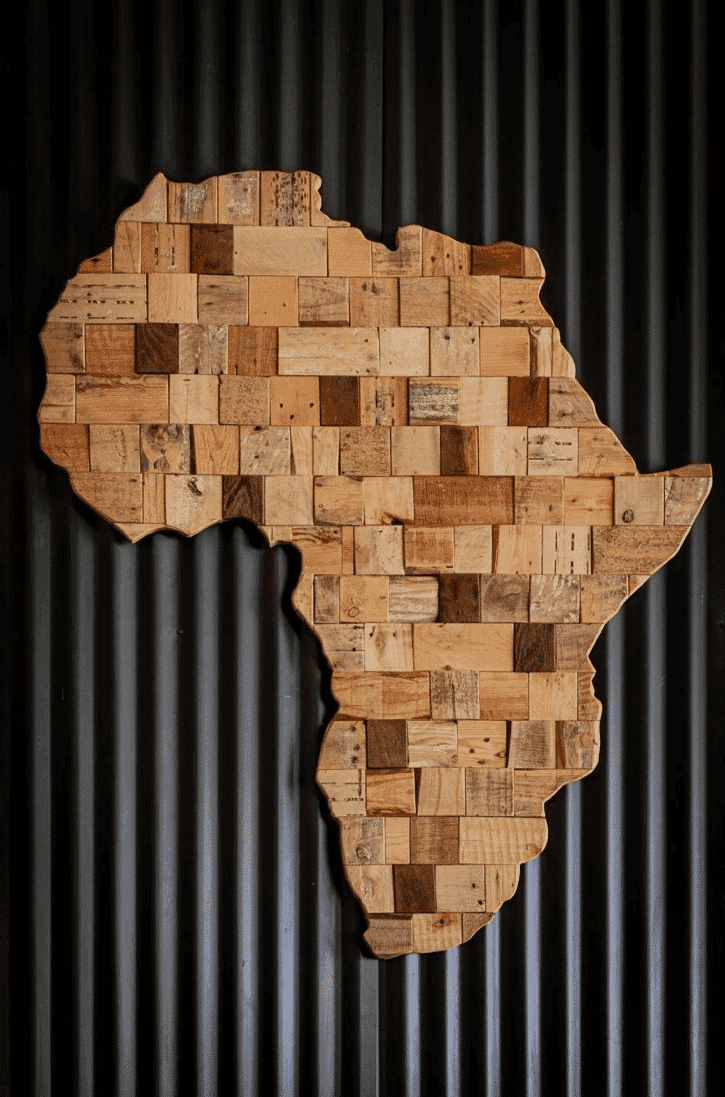
AFRICA – Guide to the World’s Largest Free Trade Area
When I say “Africa” – what do you think of? Some answer poverty, corruption, war, the developing world. Others answer opportunity, economic growth, emerging markets, the final frontier for business. The reality is that this vast continent of 54 countries (and one self-governing territory!) really boils down to a combination of all of the above.
Call me biased – I am – Africa is my favourite continent! I tend to spend time hanging out in the latter of those words describing Africa – the more positive outlook on the continent.
Did you know that, according to International Monetary Fund (IMF) data, 6 of the 10 fastest growing economies (real GDP growth) in the world in 2019 are in Africa: Senegal (6.9%); Côte d’Ivoire (7.5%); Ethiopia (7.7%); Rwanda (7.8%); with Ghana and South Sudan being tied for first place (8.8%).
A few other fun facts about the continent:
- Africa is the second most populous continent with around 1.3 billion people – 17% of the world’s population! Africa also has the youngest population in the world with the median age being 19.5 years old according to the United Nations (UN).
- 2 of the 33 megacities in the world are located in Africa today (Lagos and Cairo), and 2 more will be added by 2030 (Dar es Salaam and Luanda). By 2035 it’s estimated that more than half of Africa’s population will live in urban areas.
- Cell phone penetration in Africa is growing at a rapid rate. GSMA estimates that by 2025, over 600 million African’s will be mobile subscribers – that’s about half of the total population! Mobile also helped bring electricity and money to the poorest of the poor in Africa through innovations like M-Pesa and mobile electricity payments.
So now that we know all these great tidbits about Africa, what does this mean for business?
Introducing: The world’s (new!) largest free trade area
The African Continental Free Trade Area (AfCFTA) agreement was unveiled in Kigali, Rwanda in March 2018, and has now been signed by all but one (Eritrea) of the 55 member states of the African Union.
There’s lots to be excited for when thinking of what this deal can bring for the future of Africa. After all, uniting the continent means bringing together 1.3 billion people, a combined GDP of USD $2.5 trillion and the WEF highlights that Africa will be one of the world’s largest single markets, “accounting for $4 trillion in spending and investment across the 54 countries”.
The first step in moving forward with the agreement is to start by cutting tariffs for good traded within the continent. By removing existing tariff barriers, the IMF estimates that this could increase intra-Africa trade by 15-25% in the medium term.
Now that we have an idea of the impact that this trade deal will have on what’s dubbed as the global economy’s “final frontier”, how do we go about exploring potential business opportunities on the continent?
Start with market research
As you would with any other potential new business destination, it’s important to start by conducting some initial market research. We know that Africa is a vast continent comprised of 54 countries, so you want to be able to answer some key questions to help narrow your focus to 1 or 2 countries.
Questions to consider are:
- Is there a need for your product or service on the continent? What about in specific countries?
- If your product or service relies on transportation to get to the end customer, what are your options? What would the logistics of bringing your product or service to market look like?
- What are the risks to doing business that you should mindful of? Political, foreign exchange, etc.
- What does your competition look like?
- What about localization requirements for your product or service? Language, content, regulations and legal requirements, etc.
Suggested resources to help you in your research include:
- The World Bank’s Doing Business Reports – These are country reports that rank the ease of doing business in that country based on several criteria. You might be surprised to know that Rwanda and Canada rank very similarly on the overall ease of doing business!
- Export Development Canada (EDC)’s website has a variety of resources from country reports, trade insights and some great blog articles. Better yet, you can submit your questions to an EDC Trade Advisor and they will put some resources together for you! Lastly, by providing your e-mail you can unlock market entry advisors for South Africa, Nigeria and Ghana to help you make informed exporting decisions.
- Similarly, USA’s Export.gov website offers a wealth of market intelligence and reports – just type the country name in the search bar et voilà.
Get your feet on the ground 
Once you’ve exercised your superior research skills and have narrowed your focus down to 1 or 2 countries, your next step is to book a safari business trip! Yes, that’s right, you need to get your feet on the ground and build some relationships – IN PERSON.
If you’re familiar with the terms “low-” and “high-” context cultures, African countries largely all fall within the high-context culture bucket. What this essentially means is that building relationships is very important when it comes to doing business on the continent.
Not only is it important for you to make connections while you’re there, visiting is the only way to get a true feeling for what the people, culture and business environment are like.
Here are some suggestion resources that can help you plan your trip and get you connected on the ground:
-
- The Trade Commissioner Service – start with your local Trade Commissioner here in Canada and they can get you connected to their colleagues abroad. Trade Commissioners can help you in a variety of ways, like setting up meetings for you in market, validating potential customers, introducing you to a local agent. They also organize Trade Missions for Canadian companies to specific markets.
- Local African business organizations like the Canada-Africa Chamber of Business and the Canadian Council on Africa.
- Carry out a basic Google search to determine if there are relevant trade shows, events and the like that you could attend in the country(ies) you are exploring. EventsEye is also a great resource for trade shows and business events taking place around the world.
- Need funding to get you there? Effective 22 August 2019, the CanExport Program can cover up to 75% of eligible business development expenses (trade shows, business travel, etc.) up to a maximum CAD $75,000.
Turn challenges into business opportunities
There’s no doubt that there are still challenges to doing business in Africa, and logistics is certainly one of them. The connectivity and quality of road and rail infrastructure across the continent isn’t always stellar.
Many countries still suffer from pothole-filled roads (like Canada!) and many rail lines are either dated, non-operational or terminate at the country border. The image below taken from the BCG report “Pioneering One Africa: The Companies Blazing a Trail Across the Continent” depicts the logistical fragmentation of the continent.

Also in this report, the BCG notes that the average flight time between major cities in Africa is 12-15 hours, including connections, as direct flights are few.
That said, some companies have been looking to Africa’s challenges for innovative business opportunities:
- Kenyan-based company, Lori Systems, is like the “Uber” of long-haul transport solutions for all types of freight bulk, and is now working with fleets in Kenya, Uganda, Rwanda and South Africa. Through its logistics optimization platform, Lori is addressing the problems facing long-haul transportation on the continent, that will in turn will help to drive down the high costs of produce that consumers are currently facing – two birds, one stone!
- US-based company, Zipline, designed a medical delivery drone with the mission to “provide every human on Earth with instant access to vital medical supplies”. The company launched in Rwanda in October 2016, expanded to Ghana in April 2019 and has made 17,213 lifesaving deliveries by drone to-date – amazing, right?!
Lastly, with the continent-wide free trade deal, improvements to road and rail infrastructure and airport connectivity are sure to follow.
Are you doing business in Africa? What innovations could your company bring to the continent?
About The Author
Megan Malone is a Certified International Trade Professional (CITP®) with a passion for African business, international trade and economic growth. In her current role as an Advisor with Export Development Canada (EDC), Megan helps connect Canadian technology companies to international business opportunities.
Previous work experiences include CARE International in Zambia, a cooperative association in Rwanda, Global Affairs Canada, the Canadian Trade Commissioner Service, the South African High Commission to Canada, and the North South Institute (international development think tank), as well having been a Board Member for the Organization of Women in International Trade (OWIT) Ottawa chapter.
Her studies include an Undergraduate Degree in African Studies and Political Science from Carleton University and a Graduate Certificate in International Business Management from Algonquin College, with CITP® certification. In 2017, she was recognized as one of Carleton University’s Faculty of Public Affairs’ 75 most inspiring Alumni.
Megan has visited 9 countries in Africa and has worked in Ghana, Rwanda and Zambia.
“The views and opinions expressed in this article are my own.”