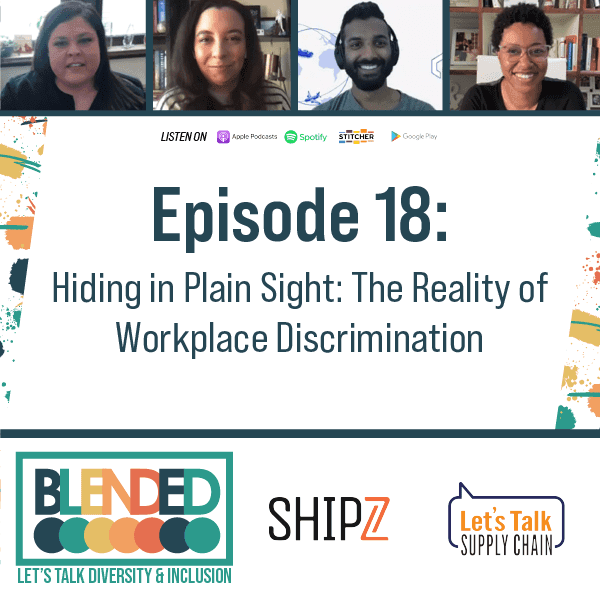
252: Blended – Hiding in Plain Sight: The Reality of Workplace Discrimination
It’s episode 18 of Blended: I’m joined by another amazing panel of guests and we’re talking about workplace discrimination. It’s a sensitive subject: something that a lot of people have actually experienced, but not something we like to talk much about. So, of course, it’s a topic we want to tackle head-on!
Today, our guests will be discussing exactly what discrimination means and why it happens; sharing their own personal experiences; reflecting on the differences between discrimination, micro-aggressions, victimization and bullying; and the panel will be sharing their advice for creating more supportive and inclusive workplaces.
Introductions to our Blended panelists. Dyci – Founder and CEO of New Gen Architects Jennifer – Director of Public Information at Citizen Potawatomi Nation Miles – Co-founder & CEO of Cargologik Brittany – Marketing Director at Interior Design Magazine
The group discusses the basics around workplace discrimination: what it means, the reasons that people are discriminated against and how it differs from bullying, harassment, victimization and microaggressions.
The panel shares their own personal experiences of workplace discrimination, and the impact of those experiences. Dyci’s experience of micro-aggressions Disguising bias behind a compliment How discrimination changes across industries Miles’s experience of victimization HR in theory vs HR in practice Discrimination in fundraising Conscious vs unconscious bias Tolerance Jennifer’s experience of being silenced White passing, ownership of culture ad exclusion Brittany’s experience of seeing an interview candidate excluded due to disability Woman to woman discrimination and competition Representation and internalized diversity quotas
The group shares their suggestions for actionable ideas and insights for our own workplaces. Education and ongoing learning Creating safe spaces Mentorship Blind applications Developing a reporting process that doesn’t involve naming your accuser Speaking up and supporting others Asking for help, bringing in external expertise Building the right culture Re-branding HR
The panelists sum up their learnings from today’s discussion. “It’s also incumbent on each of us to not allow space for discrimination, to call it out whenever we see it, to say ‘there’s no room for that attitude here.’” Jennifer